

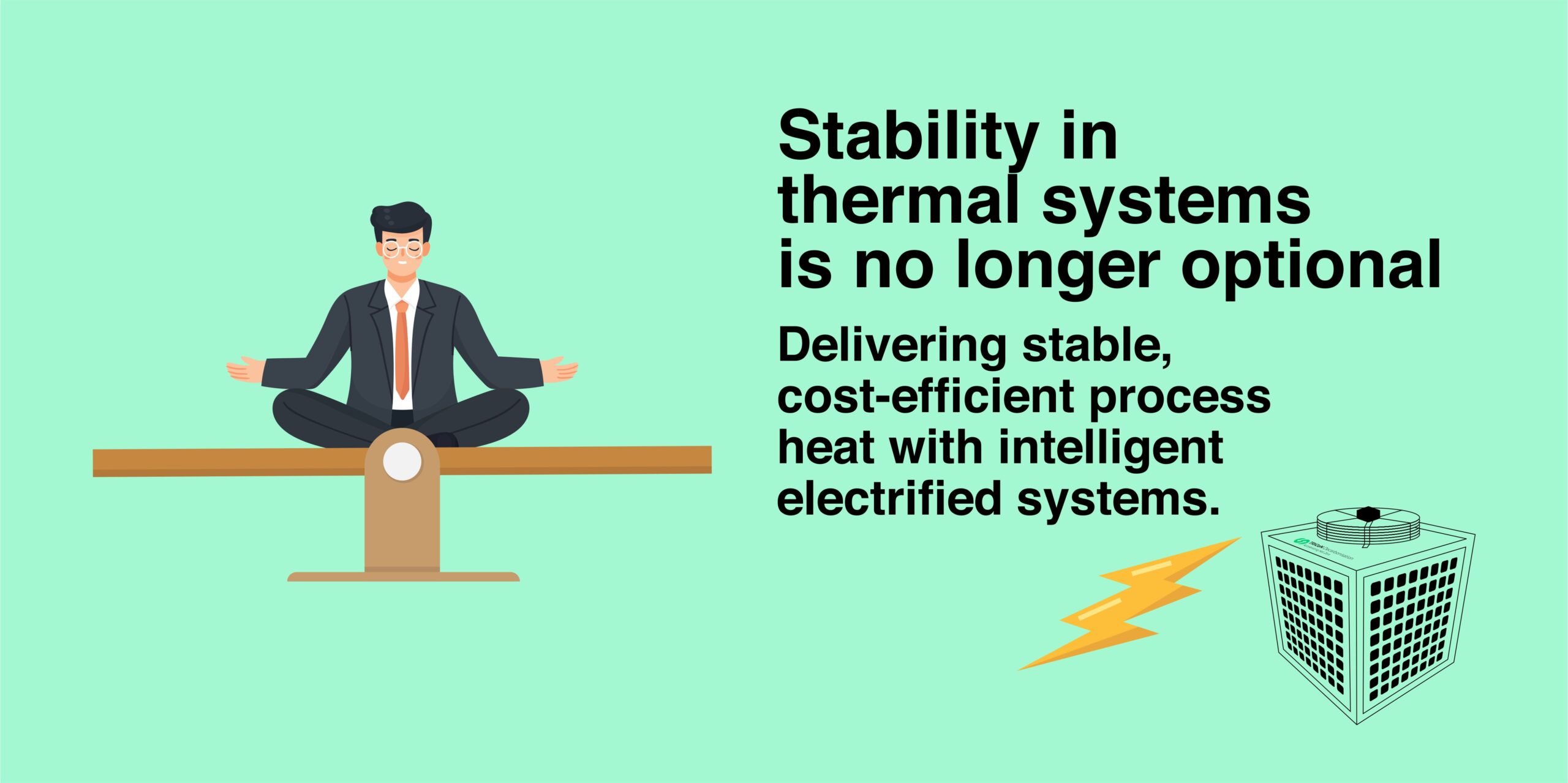
Delivering Stable, Cost-Efficient Process Heat with Intelligent Electrified Systems
Introduction: The Real Cost of Thermal Instability
In industrial operations, thermal systems are central to production performance. From maintaining process temperatures to ensuring consistent output, heat delivery has a direct impact on efficiency, quality, and reliability.
However, many plants continue to operate with systems that fluctuate due to changing load conditions, variations in fuel quality, and dynamic operating environments. These fluctuations are often considered part of normal operations, but their impact is far from minor.
Even small variations in heat delivery can gradually lead to inconsistent product quality, reduced process efficiency, higher rejection rates, and increased energy consumption. Over time, this lack of stability creates operational inefficiencies and raises overall costs.
In this context, thermal stability is no longer optional. It has become an essential requirement for maintaining control and achieving consistent industrial performance.
Conventional heating systems, particularly those based on combustion, are not inherently designed to handle dynamic industrial conditions with precision. While they perform adequately under fixed conditions, real-world operations rarely remain constant.
As plant loads change and fuel quality varies, these systems tend to produce inconsistent thermal output. This leads to unstable temperature profiles, requiring frequent manual adjustments and reducing overall efficiency. At the same time, dependence on fuel handling and combustion processes adds complexity to operations, increasing maintenance requirements and operational risks.
The result is a system that struggles to deliver uniform and predictable heat, making it difficult for industries to maintain tight process control.
TRIGeN DC addresses these challenges with electrified heat pump systems that are engineered specifically for industrial applications. These systems are not just a replacement for conventional heating—they are designed to improve how thermal energy is generated, managed, and utilised within the plant.
At the core of TRIGeN DC’s approach is the ability to deliver stable and controlled thermal output with High Temperature Heat Pumps, regardless of fluctuations in load or external conditions. This ensures that processes receive consistent heat input, which directly improves operational reliability.
Another key aspect is how these systems handle energy. Instead of relying on continuous fuel combustion, TRIGeN DC heat pumps are designed to recover and reuse available heat within the process cycle. This reduces energy wastage and improves overall system efficiency without adding operational complexity.
This approach also allows plant operators to maintain better control over process parameters. When temperature delivery becomes stable and predictable, it becomes easier to maintain consistent production conditions, reduce variability, and improve repeatability across cycles.
At the same time, reducing dependence on fuel-based systems simplifies plant operations. The need for fuel handling, combustion management, and related maintenance is significantly lowered, resulting in a more streamlined and reliable setup.
Overall, TRIGeN DC systems add value not just through energy savings, but by improving process stability, operational control, and long-term reliability.
What Changes at the Plant Level
The impact of adopting TRIGeN DC heat pump systems can be clearly seen at the plant level, both in terms of efficiency and operational performance.
Key improvements include:
These changes translate into more predictable operations and better utilisation of energy resources, helping plants operate more efficiently under varying conditions.
The stability offered by TRIGeN DC systems comes from a combination of intelligent design and efficient energy management.
A key feature is the ability to capture and reuse heat that would otherwise be lost. By reintegrating this energy into the process, the system maintains a more efficient thermal cycle while reducing the need for additional energy input.
In addition, the system is designed to deliver controlled and predictable heat output, ensuring that required temperature levels are maintained consistently. Since the system does not rely on combustion, it avoids fluctuations caused by fuel inconsistencies, resulting in more stable performance across operating conditions.
When thermal systems become stable, it benefits the entire operation.
Stable heat input improves process consistency, which enhances product quality and reduces losses. It also reduces the need for frequent adjustments, allowing operators to focus on optimising production rather than managing fluctuations.
From a cost perspective, improved energy efficiency and reduced fuel dependency lead to lower operating expenses. Maintenance requirements are also reduced, contributing to long-term savings.
Additionally, the ability to maintain consistent performance across varying loads makes operations more reliable and scalable. Plants can increase or adjust production without compromising on efficiency or stability.
The industrial sector is steadily moving towards electrified heating solutions as a way to overcome the limitations of conventional systems. This shift is driven by the need for better efficiency, reduced emissions, and more reliable operations.
Electrified heat pump systems provide a practical solution by offering stable, efficient, and controlled heat delivery without the challenges associated with fuel-based systems.
TRIGeN DC is aligned with this transition, enabling industries to modernise their thermal infrastructure while improving both performance and sustainability.
Inconsistent thermal systems can limit process efficiency and increase operational challenges. Addressing this issue is essential for industries aiming to improve performance and reduce costs.
TRIGeN DC’s electrified heat pump systems offer a solution that combines stability, efficiency, and operational simplicity. By delivering controlled heat, optimising energy use, and reducing dependency on fuel systems, these solutions help industries achieve more reliable and cost-effective operations.
Because in industrial environments, stability drives efficiency—and efficiency ultimately drives results.
Industrial performance depends heavily on stable and consistent heat delivery, but conventional systems often fluctuate due to load changes and fuel dependency, leading to inefficiencies and higher costs.
TRIGeN DC’s electrified heat pump systems address this by delivering controlled, stable thermal output while recovering and reusing energy within the process. This results in significantly lower fuel consumption, improved energy efficiency, and reduced carbon emissions.
The outcome for plants is better process control, lower operating costs, and reliable performance across varying conditions—making thermal stability a key driver of efficiency and overall industrial results.