

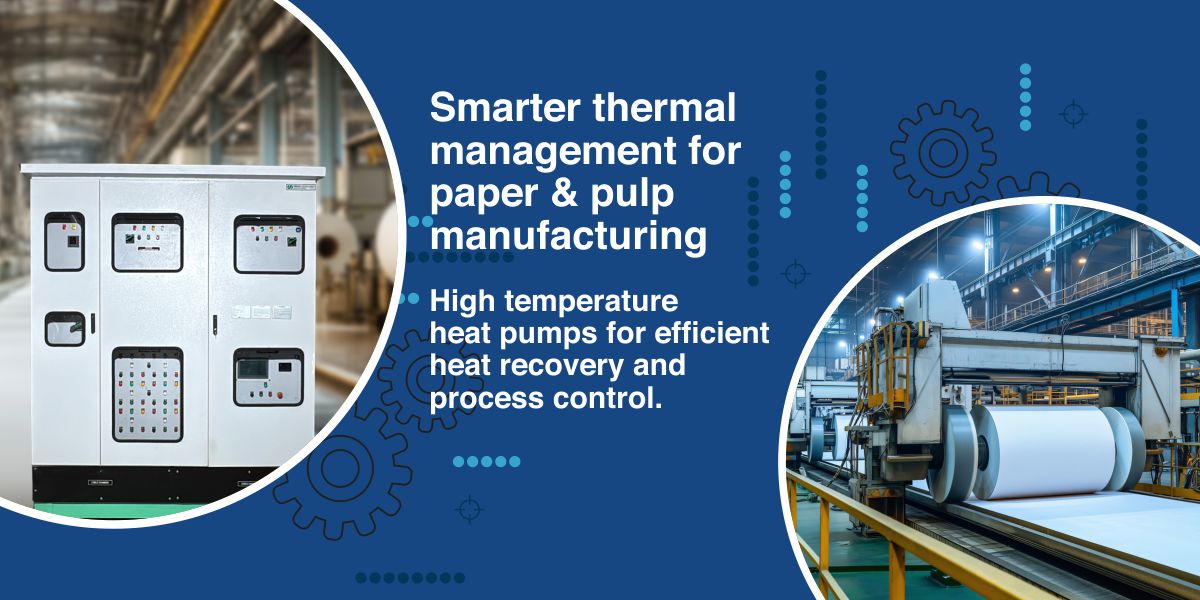
The pulp and paper sector remains one of the significant consumers of fossil fuels in the industrial world. Traditionally, paper production has required an expensive operational compromise: to sustain the thermal energy required for pulping and drying, plants have had to rely on continuous, high-pressure steam generated by capital-heavy coal, gas, or biomass boilers.
Yet, a practical audit of a typical paper mill reveals a clear systemic inefficiency. While massive amounts of energy are pumped into the front end of the facility, an incredible volume of low-grade thermal energy is constantly rejected into the environment through paper machine exhaust hoods, condenser loops, and effluent streams.
At Trigen DC, we view this rejected heat not as waste, but as an unutilized asset.
The Trigen DC Impact Baseline
In an old paper and pulp mill, heat utilization is strictly linear. Steam is generated at high pressure, passes through drying cylinders, and ultimately exits the plant as low-temperature, moisture-laden air or hot wastewater.
The primary challenge is that this waste heat typically sits between 40 to 70 C temperatures, far too low to be directly reused in processes that require 100 to 140 C. Vapor compression using Trigen DC’s High-Temperature Heat Pumps (HTHPs) bridges this thermodynamic gap.
By applying a fraction of electrical energy to drive a specialized refrigerant cycle, we elevate 50 C waste streams into + 120 C process heat. This achieves a high Coefficient of Performance (COP) that makes traditional fossil-fuel boiling obsolete for mid-temperature demands.
Maximizing the ROI of an industrial heat pump requires precise targeting of the highest-yield thermal nodes within the plant.
The drying section consumes up to 60% of a mill’s total energy footprint. As wet paper sheets pass over steam-heated cylinders, massive volumes of water evaporate into the hood exhaust air.
The chemical pulping and bleaching stages generate significant quantities of hot wastewater and chemical byproducts that must be cooled before treatment or discharge.
When assessing the integration of a Trigen DC high-temperature heat pump, engineering teams must evaluate three key factors: temperature rise, required thermal capacity, and resulting COP.
The table below outlines a typical operational model based on actual configurations in Indian paper manufacturing plants:
| Parameter | Baseline (Fossil Fuel Boiler) | Trigen DC HTHP Integration | Net Operational Advantage |
|---|---|---|---|
| Primary Energy Source | Coal / Natural Gas / Biomass | Electricity (Grid or Solar PV) | Eliminates localized combustion emissions |
| Thermal Output Temp | 120°C (Steam/Hot Water) | 140°C (Process-Ready Hot Water) | Identical thermal delivery |
| System Efficiency | 65% – 82% (Boiler Efficiency) | COP of 2.8 – 4.2 | Delivers 3.5x to 4.2x more thermal energy than electrical input |
| Annual OpEx Savings | Standard Fuel Billing | Reduced by up to 50% | ₹90+ Lakhs saved annually |
Paper mills are demanding environments in large numbers. High humidity, particulate matter, and corrosive chemical vapors will rapidly degrade standard commercial equipment. Trigen DC systems are purpose-built for heavy industrial deployments via three engineering safeguards:
With strict environmental regulations and fluctuating fuel prices in global markets, relying solely on legacy boiler systems introduces severe operational risk. Moving to smart thermal management isn’t just about meeting corporate carbon emissions targets; it’s a structural improvement in plant profitability.
By reclaiming heat previously emitted into the atmosphere, Trigen DC high-temperature heat pumps allow paper manufacturers to protect their operations from fuel volatility, stabilize process temperatures, and unlock substantial hidden profits from their existing infrastructure.
Get a Thermal Audit: To evaluate your potential ROI and assess a custom thermal layout for your manufacturing facility, connect with the Trigen DC engineering team today.